
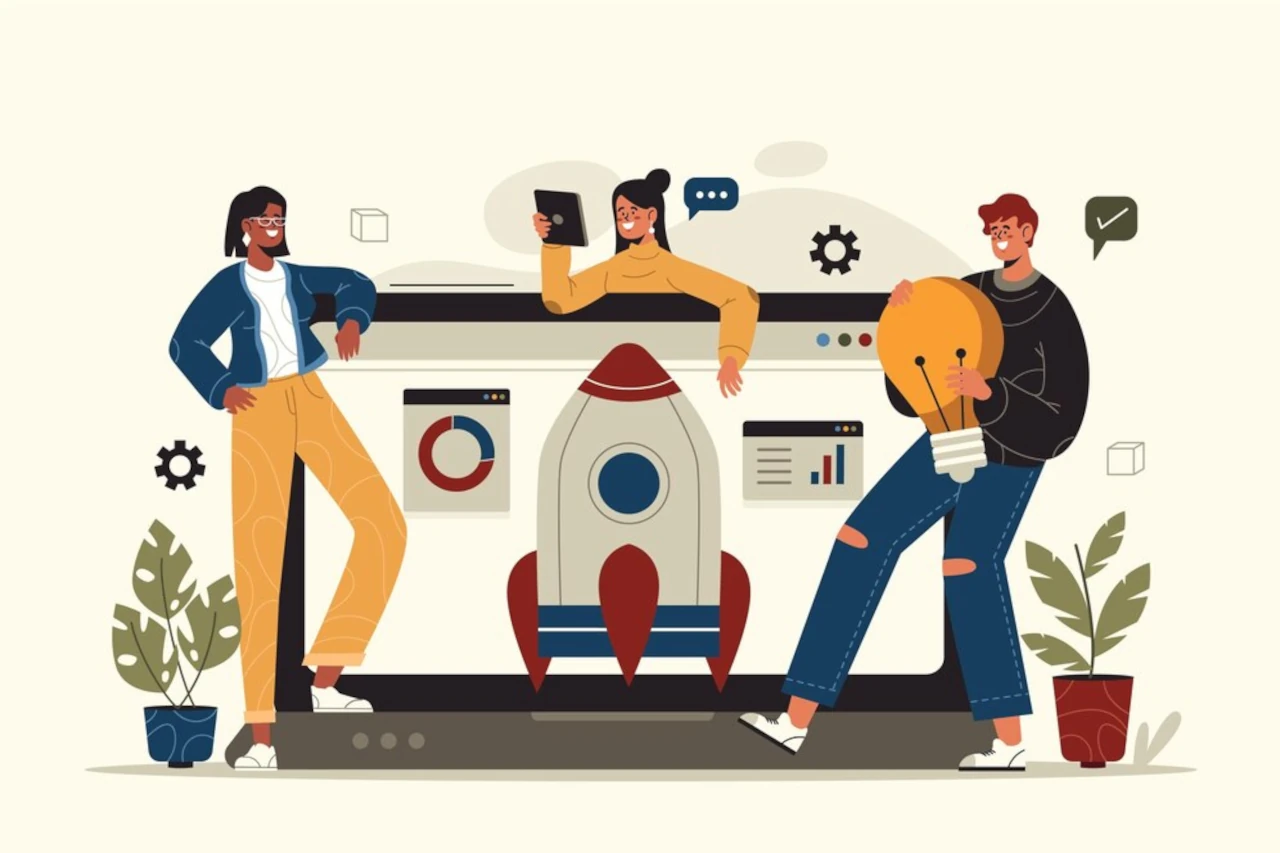
Product development turns an idea into a real product. It usually involves several stages, each with activities and tasks that keep the project on schedule, within budget and aligned with requirements. What approaches are available, and how do you begin? These seven steps take a product from its first concept to a market launch.
What is product development?
Product development covers the complete journey from an idea through manufacturing, product strategy and release. A sound process is rigorous and can take considerable time. It also includes improvements and new features for existing products, rather than only entirely new inventions.
Traditional development often follows the waterfall model: a linear sequence in which each stage must finish before the next begins. Modern development increasingly uses more flexible approaches, including agile development and design thinking.
Agile development emphasizes people, rapid prototypes, testing and feedback. Teams adjust the product as user needs and market conditions change. Design thinking also begins with users, exploring their needs deeply and considering different perspectives to create useful, original products. Short development cycles give developers and users repeated opportunities to try the product and provide feedback. Companies such as Spotify, Airbnb and Amazon have used agile approaches to accelerate development and improve quality.
Modern development therefore places greater emphasis on user experience, adaptability and innovation. Repeatedly incorporating feedback and responding to the market helps make products more competitive.
Types of product development
There are many ways to classify product development, each with different strategies and processes. Before investing, a business should assess its requirements and brand strategy to choose an appropriate approach.
- By product type: physical products, digital products or services.
- By life cycle: entirely new products, improvements to existing products or extensions of an existing range.
- By development method: waterfall, agile development or design thinking.
- By industry: manufactured goods, medical products, software and other specialized products.
Once the approach is clear, the process can be broken down into the following stages.
Seven steps in product development
- Generate ideas. A strong product begins with market research and customer feedback, combined with other sources of inspiration, to identify a concept that meets demand and can compete.
- Research the market. Once you have a concrete idea, investigate current demand and the features customers actually need. This step should not be skipped.
- Develop the concept. Define the design, functions and distinguishing features. Thorough research helps turn the original idea into something specific.
- Design and prototype. Develop the design and build a rapid prototype to test its functions and uncover practical issues.
- Test and validate. Repeated testing is essential after prototyping. Requirements vary by product, but the purpose is to confirm that it performs as intended and meets customer needs.
- Manufacture. Find an appropriate manufacturing partner and move into production.
- Launch and market. Once the product is ready for sale, introduce it to potential customers and give them reasons to buy.
These steps take a product from concept to launch. After release, continue evaluating its market performance and make adjustments when needed to improve its chances of success.
If you have questions about product development or need help with a particular stage, contact Mountainview. Our experience in turnkey development can support market research, integrated solutions and regular progress reporting, giving you more time to focus on other work while we build a competitive product together.